Rork Launches 'Max,' an AI-Powered Swift Developer That Runs in the Browser
The AI app-building platform now offers two distinct paths for mobile developers: React Native for cross-platform speed, and a new Swift-native option that promises full access to Apple's ecosystem without needing Xcode.
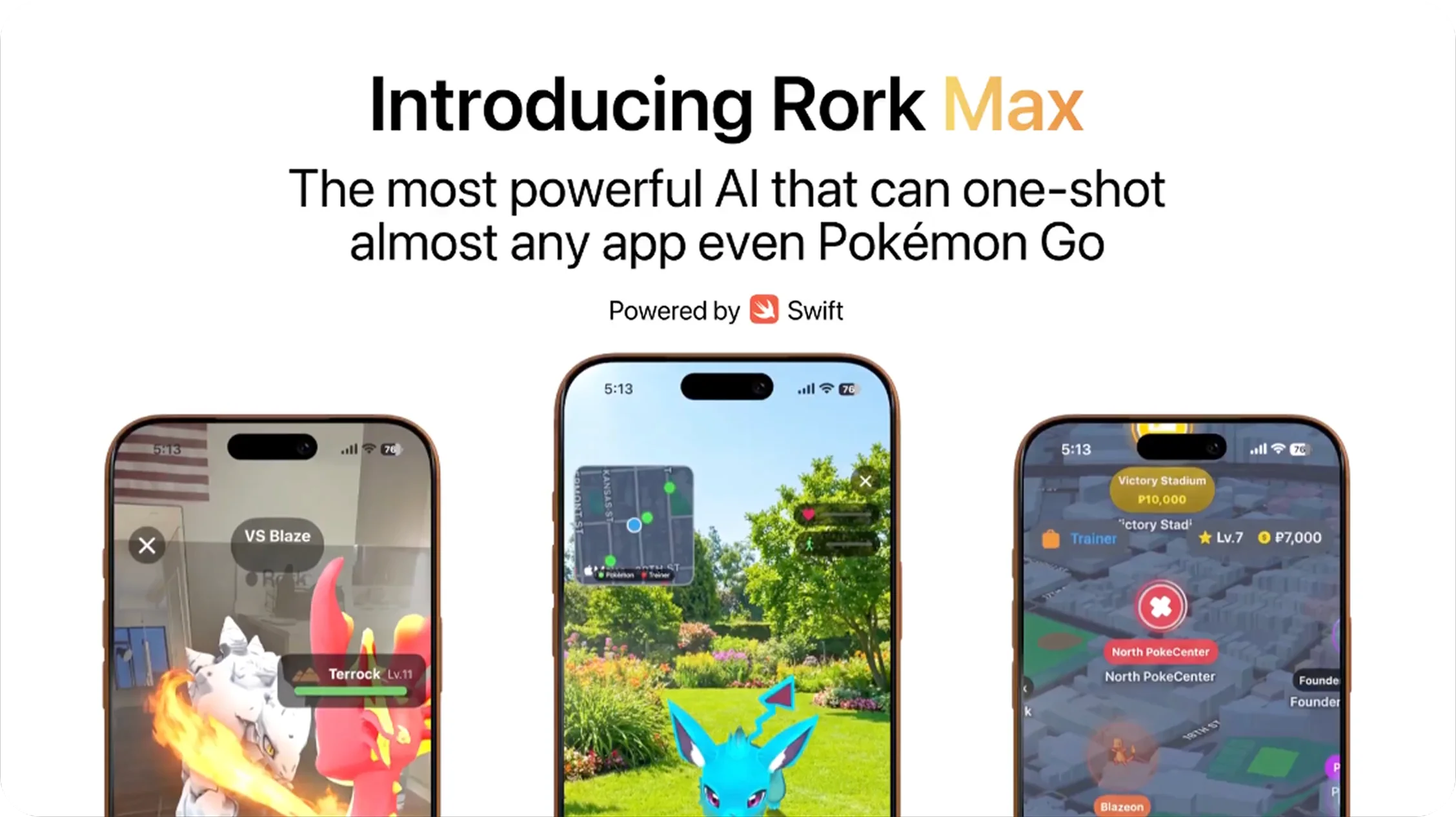
Image by Rork
Rork Launches 'Max,' an AI-Powered Swift Developer That Runs in the Browser
Rork, the AI-powered app development platform, has introduced Rork Max — a browser-based tool it describes as "the first AI Swift developer" — alongside its existing React Native offering, now branded as Rork Pro. The move gives mobile developers two distinct AI-assisted paths to building apps, each with significantly different trade-offs.
The company announced Rork Max on X, calling it "AI that one-shots almost any app for iPhone, Watch, iPad, TV & Vision Pro. Even Pokémon Go with AR & 3D." The tool is powered by Swift, Claude Code, and Anthropic's Opus model, and claims to replace Xcode entirely, offering one-click device installation and two-click App Store publishing.
Two tools, two philosophies
According to Rork's documentation, the distinction between its two products maps directly onto the longstanding divide in mobile development between native and cross-platform approaches.
Rork Pro uses React Native and Expo to generate apps that run on both iOS and Android from a single codebase. Rork Max generates Swift code that compiles natively for Apple devices, bypassing the JavaScript bridge that React Native relies on.
"Swift apps are built the same way Apple builds its own apps, which means they run directly on iOS without any translation layer in between," the company's documentation states. "The result is better performance, smoother animations, and deeper access to iOS features."
On the React Native side, Rork frames the value proposition around velocity: "React Native lets you launch on iOS and Android quickly, maintain one shared codebase, and iterate fast without worrying about platform-specific details."
What this means for developers
The practical implications are significant. Rork's documentation lays out a detailed list of capabilities that Swift unlocks but React Native cannot access — including home screen widgets, Live Activities, Dynamic Island integration, augmented reality, advanced motion and body tracking, Apple Watch companion apps, CarPlay support, Siri shortcuts, iMessage extensions, and low-latency audio processing.
For developers building fitness apps, AR experiences, games, or anything tightly integrated with Apple's hardware ecosystem, the Swift path removes what has traditionally been a major barrier: the need for Xcode expertise and a local macOS development environment. If Rork Max delivers on its promise of browser-based Swift development, it could substantially lower the entry point for native iOS development.
For developers focused on content-driven apps, marketplaces, dashboards, or MVPs that need to ship on both platforms, the React Native option remains the more practical choice. Rork's guidance is blunt: "If you're building a product that needs to live on multiple platforms quickly, React Native is usually the right move."
The bigger picture
Rork Max enters a market where AI code generation tools are proliferating rapidly, but most have focused on web development or cross-platform mobile frameworks. A browser-based tool that generates production-ready Swift code — and handles compilation and deployment without Xcode — would represent a notable shift in how native iOS apps are built.
However, several claims remain unconfirmed. The extent to which Rork Max can reliably "one-shot" complex apps involving AR, 3D graphics, or deep hardware integration has not been independently verified. The platform's ability to fully replace Xcode for production app workflows, including code signing, provisioning, and App Store review compliance, also warrants scrutiny from developers before committing to the tool for serious projects.
What is clear is that the line between native and cross-platform development — long one of the most consequential decisions a mobile team makes — is now being redrawn by AI tooling. Rork is betting that developers want both options, and that the choice should be as simple as selecting which product to use.