Astro
App Store Optimization (ASO) tool for iOS developers to track keywords, monitor rankings, analyze reviews, and improve app visibility across 60+ stores.
Key Features
- ✓Keyword tracking and ranking monitoring with daily updates
- ✓Popularity data from Apple Search Ads with difficulty scoring
- ✓Support for 60+ App Store regions worldwide
- ✓Competitor keyword analysis and discovery
- ✓DeepL API integration for instant keyword translation
- ✓Global review tracking and monitoring
- ✓Historical performance graphs and analytics
What Is Astro?
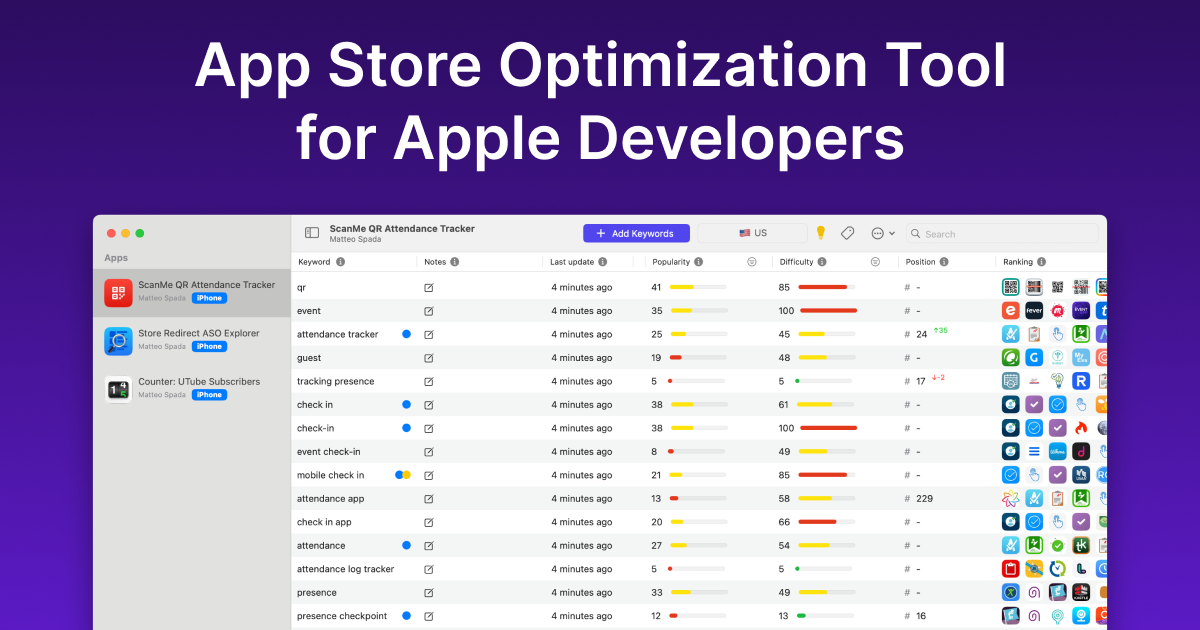
Astro (tryastro.app) is a focused App Store Optimization (ASO) tool built specifically for iOS developers. It lets you monitor your app rankings across all Apple platforms, including iOS, iPadOS, Mac, tvOS, and watchOS , while helping you discover, track, and refine the keywords that drive organic downloads. It is not a broad analytics platform or a marketing suite. It does one thing -- ASO for Apple's ecosystem -- and it does it without unnecessary complexity.
Astro was built by an independent developer who, after looking for an effective way to promote apps on the App Store, started studying ASO and built the tool he wished existed. That origin story shows in the product: the interface is clean, opinionated, and skips anything that would not directly help you rank better.
Who It Is For
Astro targets indie iOS developers and small studios who want actionable keyword data without paying enterprise-tier prices. It is described as the most budget-friendly option in the ASO space, well suited to beginners and indie makers who want to get started without friction.
If you ship apps across Android and iOS, or if your team works across Windows and Linux machines, Astro is probably not the right fit. Astro is a native macOS app, which means no Mac means no Astro -- period. This excludes every developer on Windows or Linux, and it also means you cannot check rankings from a non-Mac device. That is a real constraint worth knowing before you commit.
Core Use Cases
The primary workflow Astro supports is keyword research and rank tracking. It pulls keyword popularity data directly from Apple Search Ads and calculates difficulty scores to help you pick the right keywords. It also automatically finds which keywords your app is ranking for and can surface your competitors' keywords as well.
In practice, developers use it to find low-competition keywords early in an app's lifecycle, then track daily ranking movement after updating their App Store metadata. After just a few hours of use, it is possible to surface low-competition keywords that are realistically rankable for newer apps, using the popularity and difficulty scoring to filter out crowded search terms.
For apps targeting non-English markets, Astro integrates with DeepL, allowing instant keyword translation when managing multiple languages , which saves a lot of copy-paste work across 60+ supported App Store regions.
Pricing
Astro uses a single flat-rate annual subscription with no tiered plans.
| Plan | Price | Limits |
|---|---|---|
| Annual subscription | $108/year (~$9/month) | Unlimited apps, unlimited keywords |
The philosophy is no limits -- you can track all your apps and keywords without restrictions for a single annual fee. There is a 14-day refund window after subscribing. There is no monthly billing option, so you are committing $108 upfront. For early-stage apps with uncertain futures, that lack of monthly flexibility is worth considering.
Compared to enterprise tools like Sensor Tower or AppTweak, which run into hundreds or thousands of dollars per month, $108/year is genuinely affordable. Compared to other ASO tools, this is great value -- the kind of investment you can realistically recoup within weeks if you identify the right keywords.
Strengths and Limitations
Users consistently highlight actionable insights, easy region switching, and solid data sourced from Apple Search Ads. The UI is fast and focused. Unlike competitors with tiered pricing, Astro runs on a fixed annual subscription that supports unlimited keyword tracking, making it especially attractive for indie developers and consultants handling large portfolios.
The main weaknesses are scope and platform lock-in. It works well for Mac-only, iOS-only developers, but if you need cross-platform support or flexibility, you will find its limitations quickly. There have also been well-documented reliability issues with Apple's Search Ads API, which has affected tools that depend on it exclusively -- Astro being one of them. And some users report confusion around what is free versus paid, with calls for Astro to clarify its pricing and trial boundaries more clearly.
For an iOS-focused indie developer who lives on a Mac and wants a no-nonsense ASO workflow, Astro is a solid, honest tool at a fair price. For anyone outside that profile, check the constraints before buying.