OpenAI Releases GPT-5.6 and GPT-Live to All Users Today
OpenAI publicly launches its most powerful model family — Sol, Terra, and Luna — today alongside GPT-Live, a new full-duplex voice architecture that replaces Advanced Voice Mode across all ChatGPT tiers.
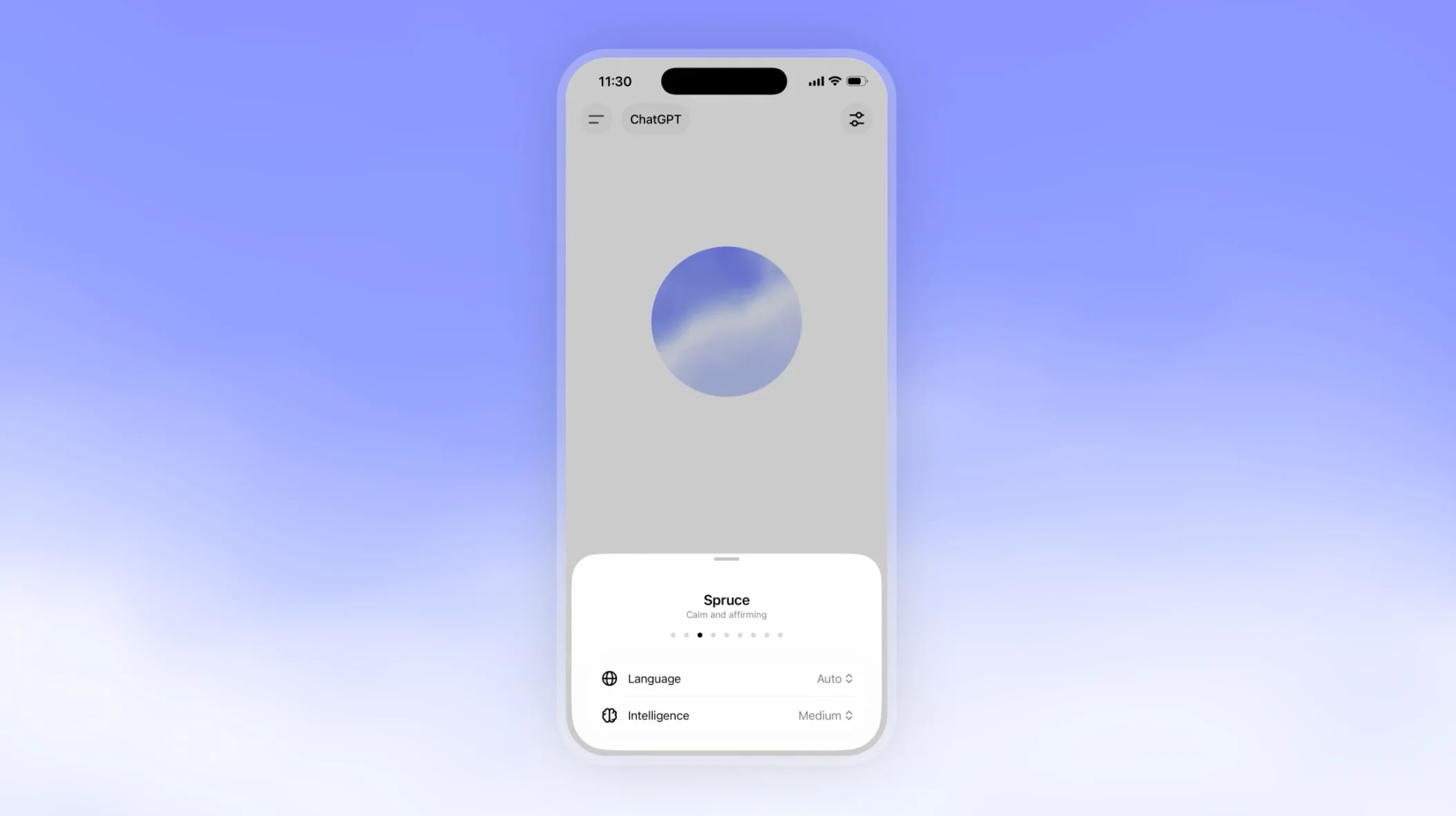
Image by CWA
OpenAI Releases GPT-5.6 and a New Voice Architecture on the Same Day
OpenAI is deploying two major launches today: the public release of GPT-5.6 Sol, Terra, and Luna — its most capable model family yet — and GPT-Live, a new generation of full-duplex voice models replacing Advanced Voice Mode across all ChatGPT tiers.
Both launches arrive together on July 9, a coordinated push that lands the same week SpaceXAI released Grok 4.5 and the frontier model race accelerates into its most congested stretch yet.
GPT-5.6: Sol, Terra, Luna Go Public
GPT-5.6 launched in limited preview on June 26 after the Trump administration requested a restricted rollout period before broader access. OpenAI confirmed on July 8 that the Department of Commerce had cleared wider access, allowing the full public launch to proceed on July 9.
The family ships in three tiers. Sol is the flagship, priced at $5 per million input tokens and $30 per million output tokens, and carries the company's strongest agentic coding performance to date — scoring 83.4% on Terminal-Bench 2.1 in OpenAI's evaluations. Terra is the balanced everyday-use tier at $2.50/$15 per million tokens, while Luna is the cost-optimized option at $1/$6. All three are available via the API and in Codex.
For coding workflows specifically, Sol ships with a new max reasoning effort mode and an ultra mode that delegates complex tasks to subagents. On ExploitBench, Sol is competitive with Anthropic's Mythos 5 using roughly one-third of the output tokens. OpenAI is also planning to launch Sol on Cerebras infrastructure at up to 750 tokens per second for select customers in July.
All three variants include more predictable prompt caching with explicit cache breakpoints and a 30-minute minimum cache life — a practical improvement for teams managing high-volume agent workflows where billing unpredictability has been a consistent pain point.
GPT-Live: Full-Duplex Voice Replaces Advanced Voice Mode
On July 8, OpenAI also launched GPT-Live-1 and GPT-Live-1 mini, replacing Advanced Voice Mode for all ChatGPT users globally. The architectural change is the headline: GPT-Live is a full-duplex model that listens and speaks simultaneously rather than operating on turn-based silence detection.
The previous Advanced Voice Mode treated silences as turn-end signals, which produced frequent misfire interruptions in noisy environments or when speakers paused mid-thought. GPT-Live makes interaction decisions many times per second — whether to speak, keep listening, pause, interrupt, or call a tool — eliminating the turn-taking rigidity that users complained about since Advanced Voice Mode launched in late 2024.
GPT-Live also decouples the voice layer from the reasoning layer. For conversational exchanges, the model handles the interaction directly. For queries requiring web search, deep reasoning, or agentic steps, GPT-Live delegates to a frontier model running in the background — currently GPT-5.5 — and continues talking while that task runs asynchronously. As OpenAI ships newer frontier models it will swap the background model without rebuilding the voice UX.
GPT-Live-1 is the default for Go, Plus, and Pro users. GPT-Live-1 mini serves free-tier users. OpenAI says more than 150 million people use ChatGPT Voice or Dictation each week. The voice API is not yet available at launch, but developers can sign up for early access notification.
What This Means for Developers
For teams integrating OpenAI models, the GPT-5.6 tier structure makes model selection more explicit than before. Terra is positioned to match GPT-5.5 performance at roughly half the cost — a meaningful option for workloads that do not need frontier-level reasoning. Luna handles high-volume, lower-stakes tasks at $1/$6, competitive with the cheapest alternatives currently available.
The more predictable prompt caching is likely the most practically useful change in the release for engineering teams. Explicit cache breakpoints and a minimum cache lifetime make billing more foreseeable for teams running large-scale pipelines, where cost variance from caching unpredictability has been a persistent issue.
GPT-Live's architecture signals where OpenAI sees the voice interface heading: less a feature inside a chat product, more a standalone modality that routes work to the best available model in the background. For developers building voice applications, the API access path will matter more than the consumer rollout — the notification list is worth joining early.