Google I/O 2026 Opens Today: Agentic Coding and New Gemini on Tap
Google I/O 2026 kicks off today at 10am PT with agentic coding and a major Gemini model update officially on the agenda, as Google challenges Claude Code, Cursor, and OpenAI Codex for developer toolchain dominance.
Image by Gizmodo
Google I/O 2026 Opens Today: Agentic Coding and New Gemini on Tap
Google's annual developer conference opens today at Shoreline Amphitheatre in Mountain View with a confirmed focus on agentic coding and a major Gemini model update — the company's most direct challenge yet to Claude Code, Cursor, and OpenAI Codex.
The keynote begins at 10 a.m. PT and streams live on YouTube and io.google, with a developer-specific follow-up session at 1:30 p.m. PT. Google's official pre-event communication from the Google Developers Blog named two topics explicitly: "agentic coding and the latest Gemini model updates." Both are directly relevant to any developer building on or evaluating Google's AI stack.
Gemini 4 Is the Expected Centerpiece
Google's last major model release was Gemini 3.1 Pro in February 2026. Reports from TechTimes, Android Authority, and multiple outlets describe a major new model — likely Gemini 4 — as the keynote centerpiece, with an expanded context window and stronger coding benchmarks as the headline specs.
Gemini 3.1 Pro currently scores 80.6% on SWE-bench Verified. Any meaningful upgrade here puts pressure on Claude Opus 4.7 (87.6% SWE-bench) and OpenAI's GPT-5.2-Codex at the top of the coding benchmark table. The practical architectural question is context window size. Gemini 3.1 Pro supports one million tokens; reports suggest the new model may target two million or more — enough to fit a large enterprise codebase into a single API call without retrieval-augmented generation.
Jules V2: The Agentic Coding Story Developers Should Watch
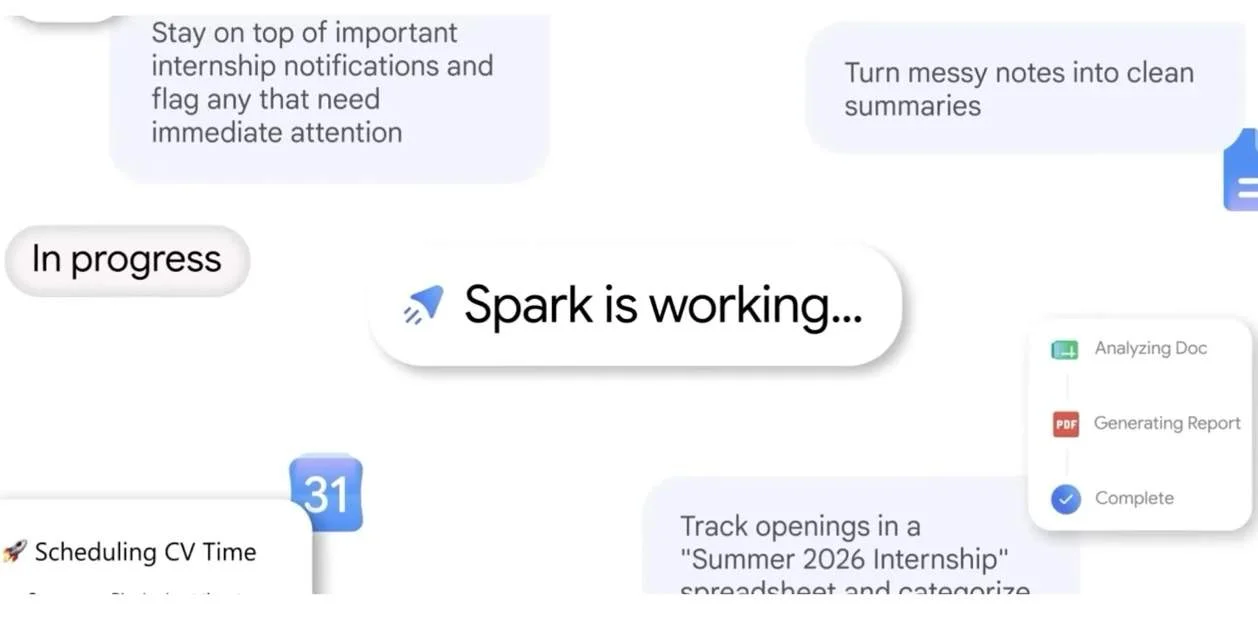
Google's Jules coding agent graduated from Google Labs in early 2026. It works by cloning a GitHub repository into a Google Cloud VM, executing a task autonomously, and opening a pull request for review — no local IDE required. The agent generated more than 140,000 publicly shared code contributions during its public beta and now runs on Gemini 3.1 Pro for paid Google AI subscribers.
The expected I/O announcement is a substantial upgrade, internally referenced as Project Jitro, that shifts Jules from task-level instructions to goal-level direction. Instead of telling the agent "fix this bug," a developer sets a target metric: raise test coverage to 80 percent, reduce p95 latency by 30 milliseconds, fix all accessibility violations. The agent then determines what changes are required to move the number.
This is a meaningfully different architecture. Most coding agents today still require developers to think in task-sized units. A persistent agent that optimizes toward a declared KPI is closer to how engineering teams talk about outcomes than how they talk about tickets. Google's official I/O session schedule includes "Building production-ready agentic workflows with Gemini" as a featured developer session — likely where Jules V2's availability path and Firebase Studio's agent mode upgrades are detailed.
Firebase Studio: The Agentic IDE Argument for Google Cloud Developers
Firebase Studio, announced at Google Cloud Next 2026 as the rebranded Project IDX, is Google's cloud-based full-stack development environment. It combines a Code OSS editor with a no-code prototyping layer, native Figma integration, and an agent mode that can execute multi-step development tasks. Backend provisioning on Google Cloud is automatic.
For developers already in the Google ecosystem, Firebase Studio is the environment Google is positioning as its AI-native alternative to Cursor or Claude Code. I/O 2026 is expected to bring clearer pricing, a production-readiness signal, and expanded agentic capabilities. The developer keynote at 1:30 p.m. PT is where SDK details and API changes typically follow the consumer-facing announcements.
The Competitive Picture
Google's challenge in agentic coding is a gap between distribution and raw capability. Gemini runs across billions of Android devices, Google Workspace, and the cloud infrastructure that underpins much of enterprise software. But Claude Code leads developer satisfaction surveys, Cursor has crossed $2 billion ARR, and OpenAI Codex reports 4 million weekly users.
A credible Gemini 4 launch paired with a production-path Jules V2 would change the calculation for a specific segment: developers already on GCP and Firebase who have been reaching outside the Google stack for agentic coding. Whether today's keynote delivers on capability rather than roadmap slides is the question every developer watching live will be trying to answer.
What's Unconfirmed
Google has not released benchmark figures, pricing details, or a launch date for Jules V2 ahead of the keynote. Whether the new Gemini model ships immediately or follows a staged rollout is unknown. The developer keynote at 1:30 p.m. PT is where technical specifics typically land — API documentation, SDK releases, and context window pricing tend to follow rather than lead the consumer keynote.