SpaceX Closes $60B Cursor Acquisition, Jointly Trained Model Coming Soon
SpaceX formally filed to acquire Anysphere, maker of Cursor, in a $60 billion all-stock deal just days after its blockbuster IPO, and confirmed a jointly trained AI model set to ship inside Cursor and Grok Build soon.
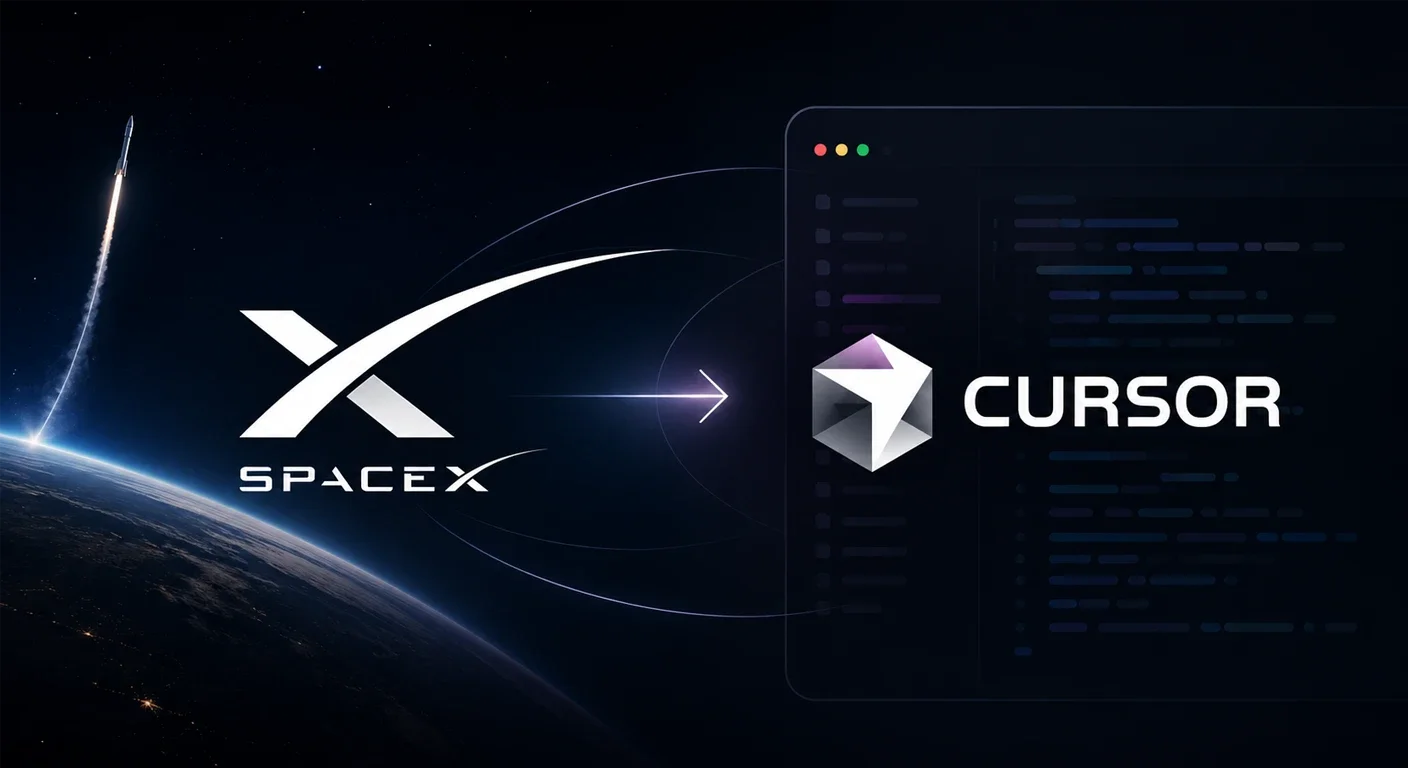
Image by CWA
SpaceX Formally Acquires Cursor for $60B, Jointly Trained Model On Its Way
SpaceX has formally exercised its option to acquire Anysphere — the San Francisco startup behind Cursor — in an all-stock deal valued at $60 billion. The company disclosed the transaction in a regulatory filing on Tuesday, June 16, just days after its historic IPO raised approximately $75 billion and valued SpaceX at over $2 trillion.
The deal, expected to close in Q3 2026, makes Cursor a wholly owned SpaceX subsidiary. "We are excited to share that SpaceX has exercised their option to acquire Cursor in an all-stock transaction with the goal of building the world's most useful AI models," Cursor CEO Michael Truell said in a statement. "We look forward to working closely with the SpaceX team to advance our frontier AI capabilities and continue to work closely with our customers and partners."
The filing comes after SpaceX secured an option in April 2026 giving it the right to either buy Cursor for $60 billion in stock or pay a $10 billion break-up fee to remain a partner. SpaceX exercised the full acquisition option just three days after going public — faster than most observers expected given the 30-day window the April agreement implied.
A Jointly Trained Model Is Already In The Pipeline
The most developer-relevant detail buried in the announcement: a jointly trained model is already in development and close to shipping. SpaceX confirmed that its AI arm, SpaceXAI (formerly xAI, which merged with SpaceX in February 2026), has been co-training a model with Cursor for several months using the Colossus 1 supercomputer in Memphis. That model is expected to arrive inside both Cursor and Grok Build "soon."
The practical implication: Cursor's next in-house model — building on Composer 2.5, released in May — will be trained on SpaceX's own infrastructure rather than rented capacity. Colossus 1 currently houses over 220,000 NVIDIA GPUs, the same cluster Anthropic signed a compute deal to access in May. Whether the jointly trained model ships as an optional choice alongside existing model support, or as a new default, will be the first concrete signal of how SpaceX intends to integrate the two companies' AI stacks.
The Model Independence Question
Cursor's core appeal to professional developers has rested heavily on being model-agnostic. The editor supports OpenAI, Anthropic, and Google models alongside its own Composer models, letting developers choose — or mix — whatever combination suits their codebase and workflow best.
That value proposition is now in question. "Cursor's unique selling point is the ability to switch models and calibrate the user experience," said Ram Bala, associate professor of AI and analytics at Santa Clara University. "If that goes away, it is no longer the same product that many developers love today. That future is uncertain."
SpaceX has not yet addressed whether third-party model support will be preserved post-acquisition. The company currently holds data center agreements with both Anthropic and Google, so its financial interests are not strictly tied to pushing xAI Grok models through Cursor. But the jointly trained model, by design, pulls Cursor's roadmap closer to the xAI stack. Teams with strict model-choice requirements should track the product direction carefully as the Q3 close approaches.
The Deal In Context
Before SpaceX entered the picture, Cursor had been negotiating a $2 billion funding round at a $50 billion valuation from Andreessen Horowitz, Thrive, and Nvidia — financing it abandoned once the acquisition offer was formalized. By June 2026, the company was generating approximately $2.6 billion in annualized B2B revenue, with its tools in use at 64% of Fortune 500 companies. Cursor's platform writes more than 100 million lines of code a day for enterprise customers.
For SpaceX, the deal is part of a broader push to make its xAI business competitive in coding. Analysts have been blunt about xAI's current position: "SpaceX hopes the Cursor team and product will give a jolt to its Grok AI business, especially in coding, which has so far failed to make a dent in the frontier market," wrote Vital Knowledge analyst Adam Crisafulli. The acquisition gives SpaceX immediate distribution to expert software engineers — a customer base xAI has struggled to reach with Grok Build alone.
What Developers Should Watch
The regulatory review window before the Q3 close gives teams time to assess dependency. Three things to track:
The jointly trained model release. How it ships — as a first-class option alongside existing choices, or as a default that marginalizes third-party models — will reveal how deeply SpaceX plans to integrate xAI into Cursor's core product.
Pricing. Cursor's current pricing structure (Hobby free, Pro $20/month, Pro Plus $60/month, Ultra $200/month) was built for an independent company. Under SpaceX ownership, with xAI compute costs and different business objectives, that model is likely to change.
Third-party model access. Cursor's partnerships with Anthropic and OpenAI are commercial agreements, not guaranteed post-acquisition. Watch for any announcements about existing model integrations as the deal progresses through regulatory review.