OpenAI Ships GPT-5.5-Cyber, Codex Security, and Patch the Planet
OpenAI expanded its Daybreak platform with GPT-5.5-Cyber (85.6% on CyberGym), a Codex Security plugin for in-IDE vulnerability scanning, and Patch the Planet — an open-source initiative with Trail of Bits that has already fixed bugs in cURL, Go, Python, and 30+ more projects.
Image by CWA
OpenAI Ships GPT-5.5-Cyber and Codex Security to Put Defenders Ahead of Attackers
OpenAI expanded its Daybreak cybersecurity platform on June 22 with three connected releases: the full version of GPT-5.5-Cyber, an updated Codex Security plugin, and a new open-source patching initiative called Patch the Planet. The combined announcement marks a strategic shift — from AI that finds vulnerabilities to AI that finds, validates, patches, and ships the fix.
The timing is deliberate. Anthropic's Fable 5 and Mythos 5 models remain suspended under a US government export-control directive issued June 12. With its most capable cyber model temporarily sidelined, Anthropic's Project Glasswing is constrained. OpenAI is using the window to establish Daybreak as the default AI platform for defensive security work.
GPT-5.5-Cyber: What the Numbers Actually Mean
GPT-5.5-Cyber scores 85.6% on CyberGym — OpenAI's benchmark for reproducing known software vulnerabilities in controlled environments — compared with 81.8% for standard GPT-5.5. On ExploitGym, which tests exploit generation from known CVEs, it reaches 39.5% versus 25.95%. On SEC-bench Pro, which measures long-horizon vulnerability discovery in complex software, it scores 69.8% versus 63.1%.
Access is restricted. The model is distributed through OpenAI's Trusted Access for Cyber program and intended for verified defenders working on authorized tasks: secure code review, vulnerability triage, malware analysis, red teaming, and penetration testing. The model continues to block credential theft, stealth, persistence, and malware deployment. OpenAI has signed Trusted Access partnerships with Australia, Canada, France, Germany, Japan, South Korea, and EU institutions including ENISA.
Codex Security: Vulnerability Scanning Inside Your IDE
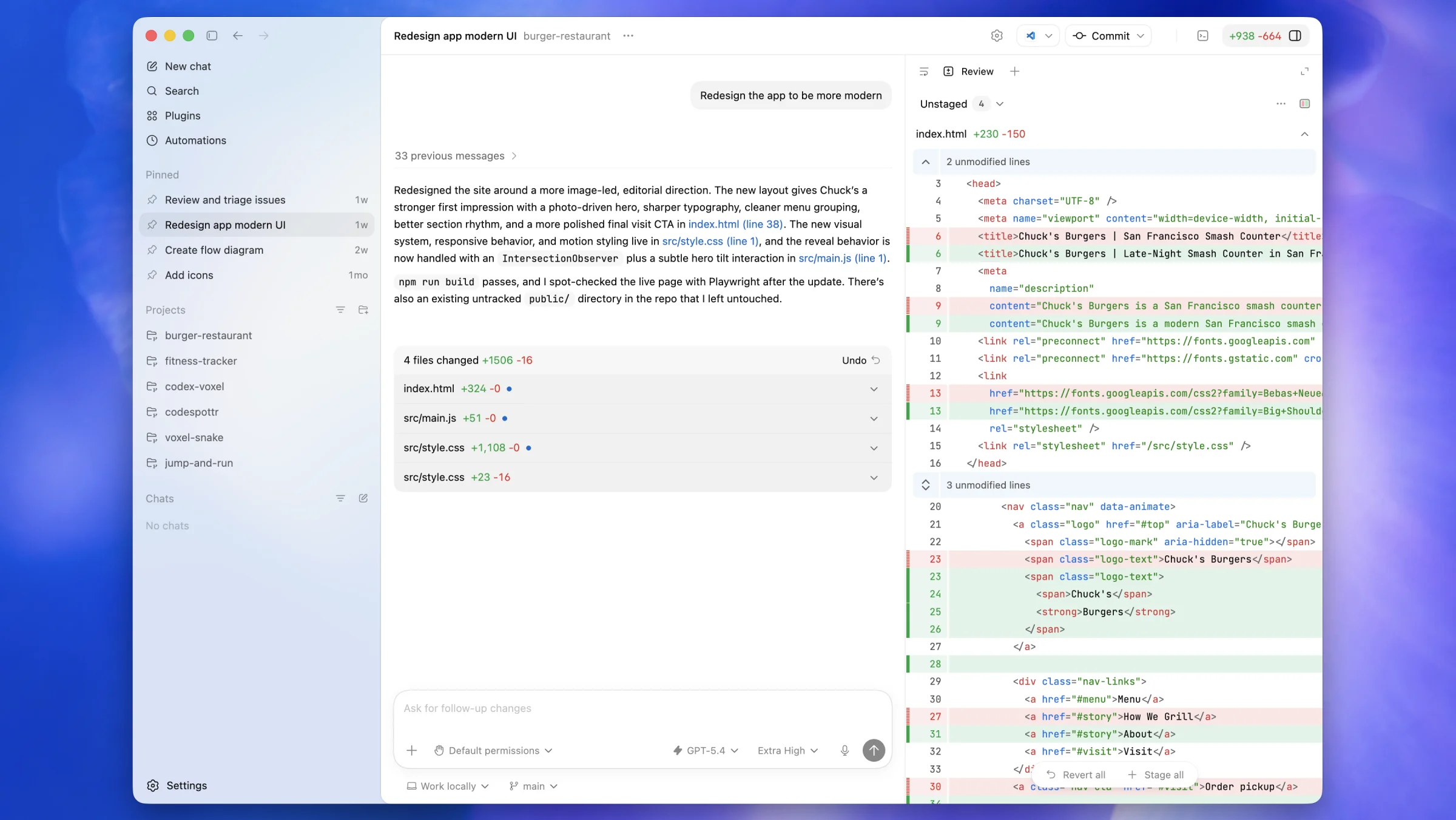
The Codex Security plugin is the piece that matters most day-to-day for developers. It integrates directly into any Codex interface — desktop app, CLI, or IDE extension — and runs end-to-end defensive security workflows without switching tools.
From a single prompt, the plugin can scan a full codebase or a specific directory, review recent commits, trace attack paths, generate a threat model, validate findings with proof-of-concept evidence, produce patches, and export results via SARIF files and CodeQL queries into existing vulnerability management pipelines.
Since the March research preview, Codex Security has scanned more than 30 million commits across more than 30,000 codebases. Human reviewers marked more than 70,000 findings as fixed; more than 500,000 were automatically confirmed resolved. The updated plugin builds on that dataset and tightens the remediation loop.
Trail of Bits demonstrated what this looks like in practice. Using repeated Codex /goal runs with GPT-5.5-Cyber, engineers built a complete fuzzing lab covering dozens of entry points, variant builds, platforms, and test seeds in under a day — work Trail of Bits estimates would normally take several weeks by hand.
Patch the Planet: Closing the Gap Between Discovery and Fix
Patch the Planet is the initiative that changes the structure of the problem, not just the speed of finding it. Co-founded by OpenAI and Trail of Bits, in collaboration with HackerOne and Calif, it pairs AI-assisted vulnerability research with full-time expert reviewers who work directly with open-source project maintainers through coordinated disclosure.
More than 30 projects have committed to participate. Initial participants include cURL, the Go project, Python, Sigstore, pyca/cryptography, aiohttp, NATS Server, and freenginx. Participating projects receive ChatGPT Pro access, conditional Codex Security access, and API credits for maintainer automation and release workflows.
Early results from a five-day sprint: 8 kernel pointer information leak proof-of-concepts and 24 local privilege escalation exploits in the Linux kernel; a 23-year-old use-after-free in OpenBSD's kernel; 34 vulnerabilities in FreeBSD including 7 local privilege escalation PoCs; four dnsmasq CVEs identified by Codex Security pattern matching; a denial-of-service technique affecting NGINX, Apache, IIS, and Pingora that exposed more than 880,000 internet-facing servers; five exploitable V8 bugs in Chrome; and more than 10 exploitable WebKit vulnerabilities in Safari.
The Firefox story is the clearest signal on real-world impact. OpenAI researchers found and reported a WebAssembly flaw to Mozilla, which patched it two days before Pwn2Own Berlin — prompting five of six registered Firefox entries to withdraw before the competition opened.
What Developers Need to Watch
For most organizations, the recommended starting point is GPT-5.5 with Trusted Access for Cyber and the Codex Security plugin. GPT-5.5-Cyber itself is reserved for teams that need the highest capability tier with enhanced monitoring, scoped controls, and direct oversight.
OpenAI is also expanding the Daybreak Cyber Partner Program, which lets security software vendors embed GPT-5.5 with Trusted Access into their own products. If major security vendors integrate, OpenAI becomes infrastructure for the enterprise security stack — the same structural positioning that protected Anthropic's Glasswing from regulatory shutdown.
For developers already using Codex, the Codex Security plugin is the most immediately useful addition. It means the tool you use to write code can now scan it for exploitable vulnerabilities in the same session. SARIF export and CodeQL query output make it compatible with existing CI/CD and bug-bounty pipelines without requiring a separate security toolchain.